luthienberen: (Default)
[personal profile] luthienberen
Our last readalong closed on The Final Problem in 1891 with Watson grieving "...the best and wisest man whom I have ever known".

Now we pick up the thread in The Adventure of the Empty House, in the spring of 1894.

Holmes Lives! )
luthienberen: (Default)
[personal profile] luthienberen
Hello All!

After a break due to other commitments on my part the Canon Read along is back! Thank you to everyone for their patience :-)

We pick up this weekend with The Empty House, which takes place after Mr Holmes' dramatic encounter with Moriarty.

Happy reading to everyone!
mightymads: (Default)
[personal profile] mightymads
David Burke turned 87 yesterday :D

 
mightymads: (Default)
[personal profile] mightymads
Today is the 162nd anniversary of ACD's birthday. For the occasion, here's a quote from the man himself:

"In short stories it has always seemed to me that so long as you produce your dramatic effect, accuracy of detail matters little. I have never striven for it and have made some bad mistakes in consequence. What matter If I can hold my readers? I claim that I may make my own conditions, and I do so. I have taken liberties in some of the Sherlock Holmes stories. I have been told, for example, that in "The Adventure of Silver Blaze," half the characters would have been in jail and the other half warned off the Turf for ever. That does not trouble me in the least when the story is admittedly a fantasy.

It is otherwise where history is brought in. Even in a short story one should be accurate there. In the Brigadier Gerard stories, for example, even the uniforms are correct." © 
 
luthienberen: (Default)
[personal profile] luthienberen
Similar to [personal profile] mightymads who posted a fabulous entry full of informative 1920s fashion recs, YoutTube also seems to know what I like and amid lots of historical re-enactments recs, a couple of fascinating Victorian era videos popped up.

Both videos are by Ellie Dashwood who also has a series of videos explaining facts from the Regency era & Jane Austen, such as naming conventions and how they changed throughout the Georgian period (highly recommend that video!)

Social Networking Among Victorians 19 minutes 40 seconds.
This video goes into detail about how, when and why Victorians paid social calls upon each other. For example, for creating marriage offers. Also, paying social calls were seen as essential to help found (or further) the careers of children and husbands.

I wonder if Watson paid any social calls on his own behalf (or if friends did) when entering the army / medical university to gain any connections?

The video is quite engaging and interesting, with references to the modern day which leads to amusing comparisons.

Calling cards are described and how names were listed depending on marriage status. For instance, young unmarried ladies did not have their own calling cards, instead their names were listed underneath their mother's, but if they were accompanying someone who wasn't their mother, the chaperone would add their name in pencil beneath their name on the calling card. An exception to this rule was if you were socially recognised as an old maid, then you could have your own cards printed. (Another exception would be women couldn't call upon bachelor men.)

Note: Ellie Dashwood lists relevant books in the video summary for anyone wishing to further their knowledge of the subject.


Index for video )


What is Aristocracy? Defining the British Aristocracy, Gentry and Good Society 12 minutes 16 seconds.
This video isn't strictly centered on the Victorian era, but nonetheless is an easy peek into defining the British aristocracy, gentry and good society in general. :)


Index for video )
mightymads: (Default)
[personal profile] mightymads
Youtube definitely knows my tastes by now. It suggested me a few videos I found fabulous.

The first one is by Karolina Zebrowska, where she describes daily women's fashion from year to year throughout the decade and as usual debunks some myths in the process:

The second one is an extensive lecture on menswear in 1920s, from hats to undergarments. Highly recommended for those who write period fic--it's a treasure trove of details. I'm afraid that embedded playback is disabled for this video, but it's definitelty worth watching on youtube.

And the third one is just a feast for the eyes. Everything mentioned in the video above put into practice. Enjoy!

mightymads: (Default)
[personal profile] mightymads
I've already recommended these two podcasts, but there are recent episodes I'd like to mention.

1) On March 22 History Extra posted an episode about ACD and the real life case he investigated. In 1903, a case of George Edalji, a Parsee lawyer who had been unjustly convicted, was brought to Doyle's attention. At that time Doyle had a crisis in his personal life: his first wife had died of tuberculosis, and he felt guilty because he was in love with another woman who was to become his second wife. The Edalji case helped Doyle to overcome his depression. It was a just cause: he set out to obtain a full pardon for the man labeled as a criminal due to racism which was commonplace in the Edwardian Britain.

Hate mail & mutilated horses: Conan Doyle investigates

Note: descriptions of mutilated animals are not very graphic, but still the content might be sensitive for some people.


2) Just yesterday Caroline Crampton posted another brilliant episode of her Shedunnit podcast. This episode is dedicated to Hercule Poirot and the way he is portrayed in various adaptations. Caroline also provides Poirot's backstory, how Agatha Christie created him, and how her atitude toward him evolved throughout the years.

The Many Afterlives of Hercule Poirot
mightymads: (Default)
[personal profile] mightymads
Finally finished my WIP. Between work and other things there wasn't much free time, but here's something naughty.

Title: Scarlet Fever
Universe: ACD
Pairing: Holmes/Watson 
Word count: 3,000
Rating: Explicit 
Summary: Sherlock Holmes used to be quite indifferent to the charms of military men until Dr. Watson had to don his uniform for a case.
 
Scarlet fever. A flirtation with or passion for a soldier, ca. 1860-1910. With reference to the scarlet uniform.
A Dictionary of Slang and Unconventional English
mightymads: (Default)
[personal profile] mightymads
Hello everyone! There's been a lull in this comm due to RL things, and the read along is temporarily on hiatus, but soon we'll be back. Meanwhile, I'd like to talk about two awesome podcasts I've been listening to for the past few weeks. 

The first one is History Extra podcast, produced by BBC History Magazine. There is a HUGE number of episodes, covering various topics from pre-historical to contemporary periods. I'm listening to it by selecting episodes which interest me, such as Victorian Medicine, Everything You Ever Wanted to Know About the Victorians, Identifying Jack the Ripper, Science and Suffrage, The Roaring 1920s: Roaring or Tame?, etc. The episodes are structured as interviews with historians, writers, educators, and other specialists. For example, for the Victorian Medicine the hosts invited Dr. Lindsey Fitzharris, the author of The Butchering Art, a book [personal profile] luthienberen recommended a while ago and which I am still to read. Dr. Fitzharris shared her in-depth knowledge of medical history in a fascinating interview. She is a really good storyteller which is important for the podcast format. Sometimes I couldn't finish an episode with an intriguing topic because the interviewee was boring, but Dr. Fitzharris was certainly not the case. Despite the gruesome aspects of medical realities of the early 19th century her tale was a sheer pleasure to listen to.

The episodes about the Suffrage movement were very interesting and insightful too. In one of them the host and the interviewee discussed terrorist methods which were employed by the Suffragettes, their motives, the price they payed for their beliefs, and the questionable morality of achieving higher goals with such means.

I'll continue to listen to this podcast for a long time still, since there are so many episodes. If you already knew about this podcast and have favourite episodes, please let me know in the comments!

I've learned about the second one from an episode of History Extra called The Big Questions of LGBTQ History. A very interesting episode in itself, it also referred to a podcast called Bad Gays. The Bad Gays podcast is hosted by Huw Lemmey, a writer and novelist, and Ben Miller, a writer, historian, and member of the board of the Gay Museum in Berlin. The hosts approach each episode in a creative way, studying their sources minutely and providing backstories of the people they talk about. Namely, they discuss queer men who did morally bad things or had problematic attitudes and questionable lifestyles. Just as the History Extra pod, Bad Gays include men from different histrical periods, from Alexander the Great to Truman Capote. Again, I haven't listened to all the episodes yet. So far I have chosen the episodes concerning men from the Victorian and Edwardian eras, such as Bosie (whom the hosts call 'evil twink' XD), Prince Albert Victor (Queen Victoria's grandson who was involved in the Cleveland Street Scandal and was even suspected to be Jack the Ripper), General Gordon (on whom Watson had a man crush), Lawrence of Arabia, and Roger Casement (a diplomat and Irish nationalist, whom ACD defended to the bitter end).

While in case of History Extra I had to be selective, as not every episode proved to be interesting, every epidose of Bad Gays I've listened to so far was excellent, really recommend it.


starfishstar: (Default)
[personal profile] starfishstar
Hi Victorian 221b folks! I've been given kind permission from the mods to post and let you know about the upcoming summer round of [community profile] holmestice:

Holmestice is a long-running fanworks exchange for the Sherlock Holmes fandom(s). All 'verses (from ACD canon to the wackiest adaptations) and all types of digital fanwork (fic, art, vids, graphics, podfics, fanmixes...) are welcome. Each participant signs up with the fandoms and characters they're interested in creating and receiving, and then each is assigned a recipient for whom they create a gift. Fanworks are posted to the [community profile] holmestice community and creators may simultaneously post to our community on AO3. Artists and authors remain anonymous until the master list goes up on the summer solstice. (Deducing the creators behind the anonymous works is part of the fun!)

Sign-ups for the summer round of Holmestice will open on March 17 and close on March 31. We hope you'll join us! 

Questions? Leave a comment at the [community profile] holmestice community or email the mods: holmesticemods@gmail.com

mightymads: (Default)
[personal profile] mightymads
We're halfway through the canon! Thanks so much to [personal profile] luthienberen for pitching the idea of a re-read! It's such fun and keeps the comm going.

There's a lot of interesting stuff regarding this particular story, so it's going to be a rather long post with lots of quotes. Buckle up.

Everyone knows that after Holmes had become tremendously popular, Doyle grew so fed up with him that he tried to kill him off. I was surprised to find out, however, that ACD was thinking about doing away with Holmes as early as November 1891, i.e. only some six months after skyrocketing to fame and money through the Strand Magazine! SCAN was published in July 1891, and here's what Doyle writes to his mother on November 11, 1891:

“I have done five of the Sherlock Holmes stories of the new Series. They are 1. The Adventure of the Blue Carbuncle 2. The Adventure of the Speckled Band 3. The Adventure of the Noble Bachelor 4. The Adventure of the Engineer’s Thumb 5. The Adventure of the Beryl Coronet. I think that they are up to the standard of the first series, & the twelve ought to make a rather good book of the sort. I think of slaying Holmes in the sixth & winding him up for good & all. He takes my mind from better things.” (—Arthur Conan Doyle: A Life in Letters)

Such a weird decision, isn't it? Numerous authors dream of coming up with something that would sell, and you just don't turn away from your goldmine once you've struck it. Before Holmes Doyle was struggling financially and was fairly unknown. Only half a year after the breakthrough he decides that he's done with Holmes. That speaks of Doyle's ambition, but it seems like he was a bit too sure of himself. 

Thankfully, in 1891 his mother managed to talk him out of it, and during the next couple of years Doyle did another dozen before winding it all up in December 1893. What a Christmas present to his readers.

Read more... )
recently_folded: (Default)
[personal profile] recently_folded
This is a long-running (book #8 is in print; book #9 is currently being written) series about a multiverse in which its inhabitants travel from one world to another according to their own capabilities. The multiverse is inhabited by the fae, who embody and use the forces of chaos; dragons, who are their polar opposites in embracing order; and The Library, staffed by human Librarians who speak a Language that allows them to manipulate objects in their work of keeping humans safe from the two other races. So lots of adventure and politics.

But the Librarian who is the series protagonist is based in a quasi-Victorian world, where she is friends and allies with, amongst others, the part-fae Peregrine Vale. Each fae embraces a particular archetype and their lives enact that archetype's story. Vale's is the Great Detective, the story of which sometimes leads him overenthusiastically into tracking down mysteries. He even has a police contact, the useful Inspector Singh. The writer is sparing but reliable in seeding his portions of the action with both ACD and Sherlock BBC breadcrumbs, as well as giving the protagonist many worries that Vale's chosen archetype endangers him more than he deserves as a person. In other words, Holmes' compulsion to occupy his brain with cases is cast here as a different mechanism, but still one of intellectual seduction. And thus the series protagonist, Irene Winters, can be seen as a casual sort of functional Watson although without the intensity of relationship that typically characterises most Holmes/Watson pairings. In fact, she inhabits a role that might be considered a Watsonified version of The Woman, although there is no sexual tension between the two.

I'll admit to a fist-pump in reading The Dark Archive, book #8, when the antagonist (specifically Vale's antagonist) for the episode is introduced as The Professor. Ooooooh! May we anticipate a waterfall in their future? I haven't finished it yet but I'll be surprised if the writer can resist, even if it's just a slip and fall in the shower.

There's a lot of other stuff going on in this series, but a little Sherlock Holmes fanfic never goes amiss.

Author website
Wikipedia entry
WorldCat
mightymads: (Default)
[personal profile] mightymads
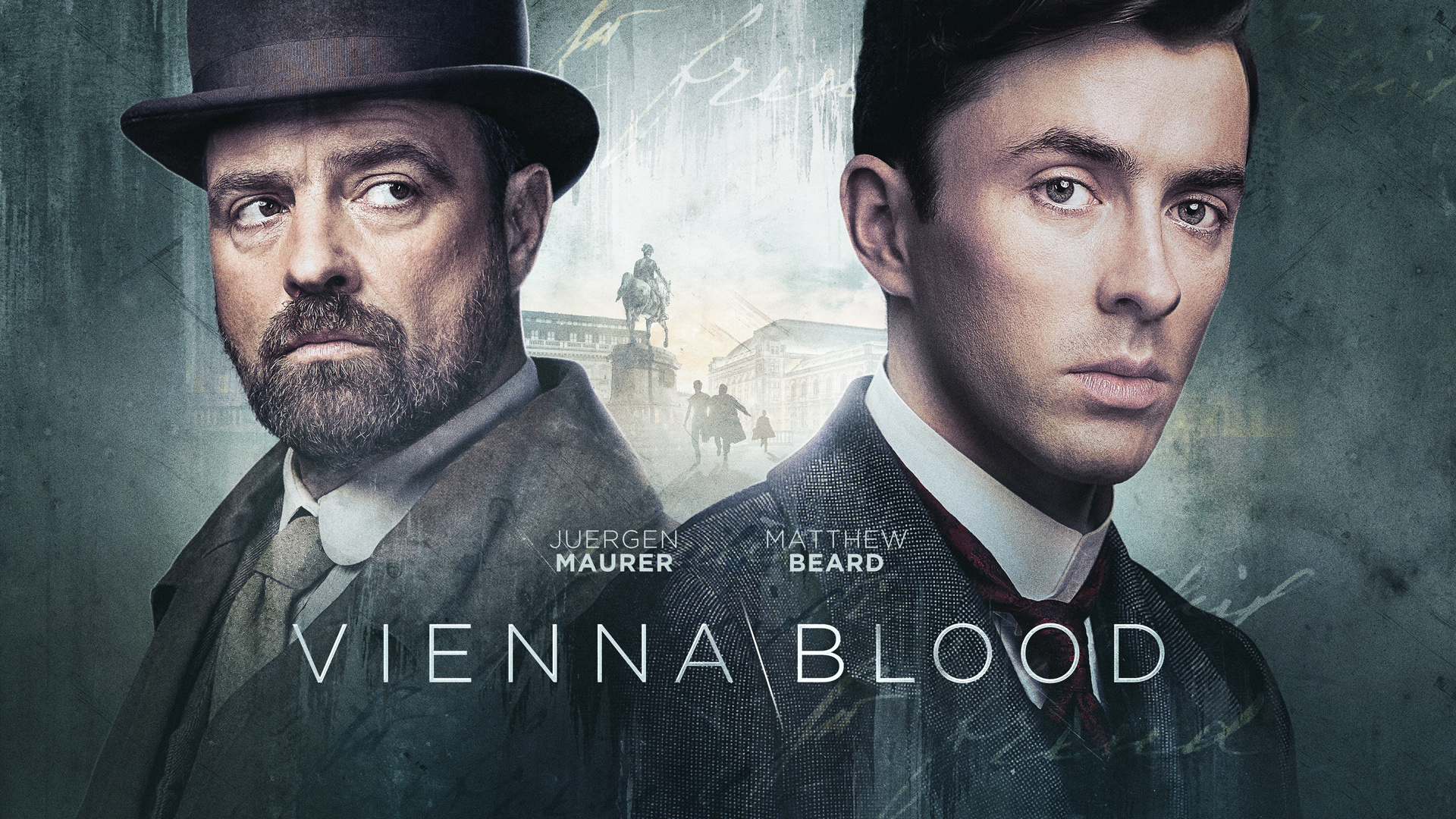
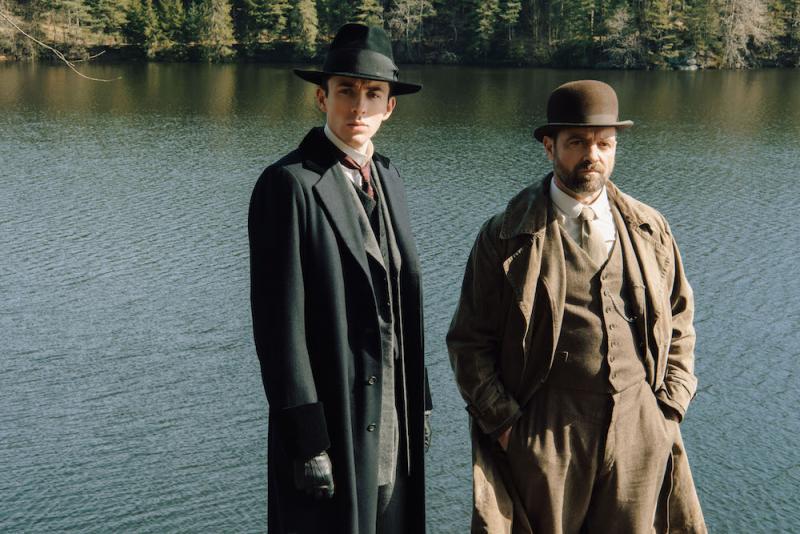
Recently, whiling away time in airports, I watched a mini-series which popped up in recommendations. Created by a Sherlock writer Stephen Thompson, Vienna Blood has many familiar traits. There's a duo of protagonists, one of them tall, dark, wearing a funny hat, and having unusual investigation methods whereas the other is heavily built, more down-to-earth, and can defend himself and his companion.


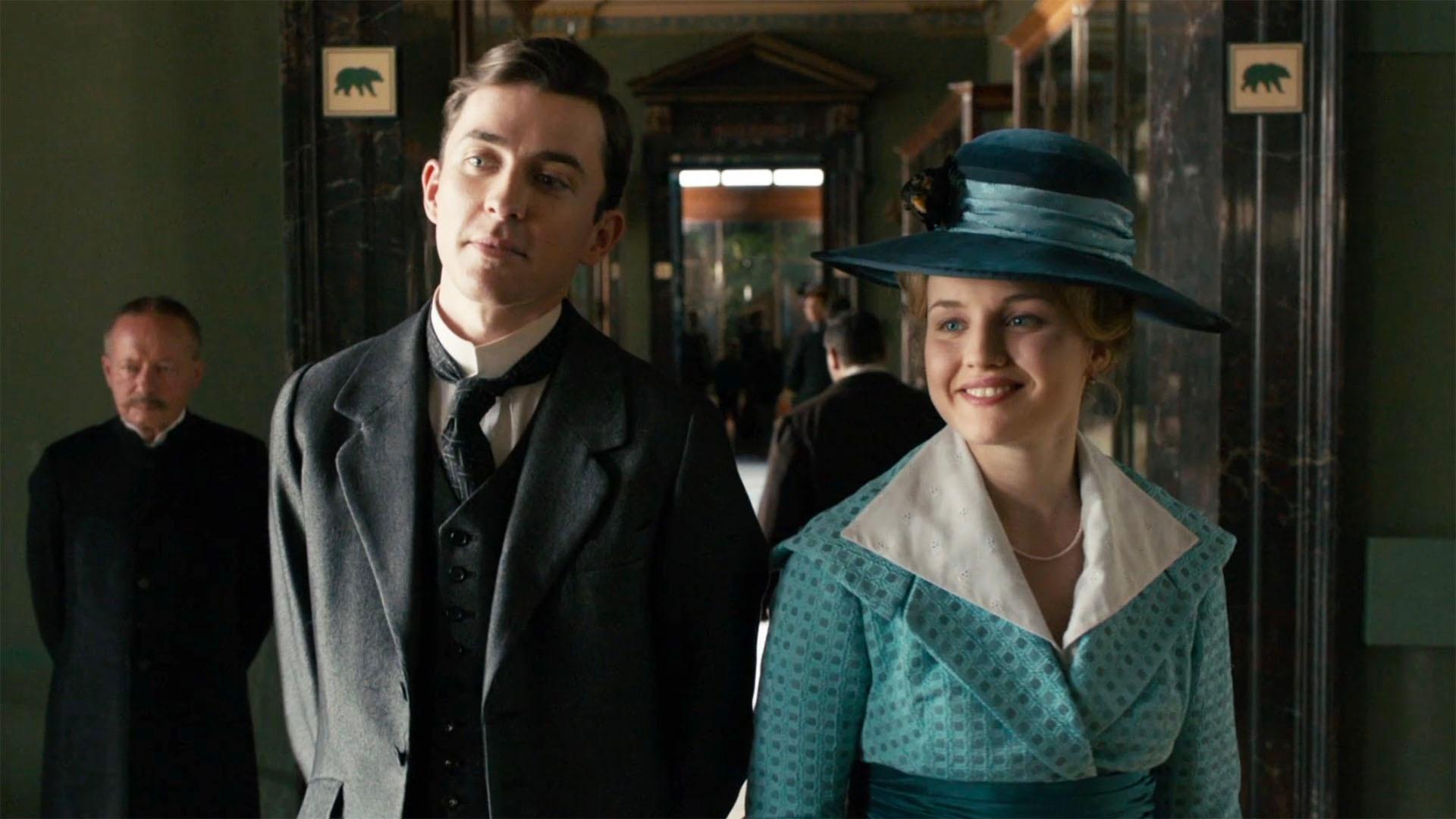
The series is set in 1907 in Vienna, where a young doctor Max Liebermann (Matthew Beard) becomes an assistant to a police detective Oskar Rheinhardt (Jürgen Maurer). At first the policeman is not glad at all that some snotty youth with connections now follows him around and is being clever, but when Liebermann's insightful suggestions based on his studies of psychology prove pivotal in solving crime cases, Rheinhardt grows more appreciative of Liebermann's company. These two definitely have the Dynamic, one being an observer of human nature and the other a man of action, one of middle class and the other of working class, and both stubborn and determined. 

Max's fiancee Clara Weiss (Luise von Finckh) deserves a special note. In the beginning she seems to be somewhat vacuous in comparison with Max the intellectual. He has little interest in her and often runs off to investigate while she, long-suffering and good-natured, lets him—a kind of a shout-out to the canon Mary. Later on, her character has a significant development. She voices her displeasure about being constantly neglected by Max, she tries to understand him and his fascination with crime, she even sets out to help him with an investigation by bravely risking her safety and posing as a bait for a suspect.


Eventually (SPOILER ALERT!), she has the courage to break off their engagement, having realised that Max is infatuated with someone else. Max, on the other hand, is good at analysing others, but when it comes to his own feelings and motivations, he is a mumbling mess. Rheinhardt teases him about it in a kind, friendly way.

Watching this series, it's easy to imagine young Holmes and his first acquiantance with Lestrade, and how Holmes gradually makes a reputation for himself while at first no one takes him seriously. It's interesting that Liebermann and Rheinhardt are on first name terms which is unusual for the time period.

There are only three episodes, but each is one and a half hour long. The cases are complex and multilayered, a real treat even if they lack the edge just a tiny bit (imo). Anyway, I'm looking forward to season 2!
mightymads: (Default)
[personal profile] mightymads
The Prompt Box was supposed to have a Fill-Your-Claim month. I kept postponing it due to other projects and then RL, feeling that if I could not commit myself, it wouldn’t be fair to ask other participants. Life can intervene. So instead I filled one of the old prompts as I wanted to write something for [personal profile] luthienberen.

Title: The Talk
Fandom: Granada
Rating: G
Pairing: Sherlock Holmes/John Watson
Characters: Mycroft Holmes, John Watson
Word count: ~1.6 K
Summary: “Pardon me, Mr. Holmes, but surely you didn’t summon me just for the sake of a social call?”
“Then I shan’t beat about the bush, Dr. Watson,” I said. “What are your intentions with my brother?”


For a prompt:

I love both Watsons in this adaptation, but Burke is my favourite. A scene where Burke's!Watson has a conversation with Mycroft about his relationship with Holmes would be fabulous.
mightymads: (Default)
[personal profile] mightymads
This time it will be a lengthy post as I'd like to go quote by quote. There are so many remarkable things!

- “I cannot be sure of the exact date, for some of my memoranda upon the matter have been mislaid, but it must have been towards the end of the first year during which Holmes and I shared chambers in Baker Street.”

Is Watson Holmes’s opposite in terms of papers? Holmes had a horror of losing/destroying his papers and thus hoarded them, whereas Watson mislaid his.

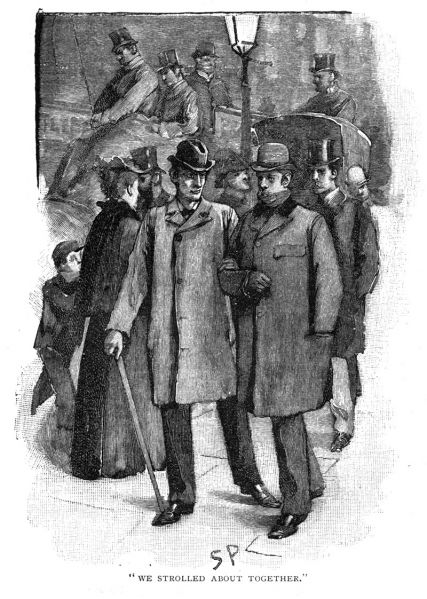
- “For three hours we strolled about together, watching the ever-changing kaleidoscope of life as it ebbs and flows through Fleet Street and the Strand. His characteristic talk, with its keen observance of detail and subtle power of inference held me amused and enthralled. It was ten o’clock before we reached Baker Street again.”

So Watson sits cooped up indoors the whole day because he isn’t sure the weather would be good for his health, but as soon as Holmes suggests a walk, Watson agrees, at 7 pm, when it must be colder? Wow.

Compare with this quote from YELL, where they have lived together for a few years:
“For two hours we rambled about together, in silence for the most part, as befits two men who know each other intimately.”

In RESI it’s their first year together and already they ramble about for THREE hours, Watson listening to Holmes spellbound.

- “I was sufficiently conversant with Holmes’s methods to be able to follow his reasoning,”

By the end of their first year together Watson is already “sufficiently conversant with Holmes’s methods”, a keen pupil, isn’t he?

- My favourite Paget illustration is from this story:


- “I followed Holmes into our sanctum.”
Our sanctum. Just think about the choice of words. Not to “our rooms” or “our flat” but “sanctum”, a safe, private place. And that’s just their first year together!

Read more... )
mightymads: (Default)
[personal profile] mightymads
It was pointed out before, but the frame narrative of this story is rather curious. After a long and exhausting day, Watson stays up until a quarter to twelve for some reason. He is married just recently, but instead of joining his wife upstairs he reads a novel. Why? Then we find out that there are bachelor quarters for one in his house. This spare room isn’t called a guest room or something, but bachelor quarters. Does he keep this room especially for Holmes if Holmes chooses to visit and sleep over? Weird. Then it gets better still: Holmes tells Watson about his current case, and voila, Watson is lively and wide awake whereas before Holmes’s visit he was tired and sleepy. His practice is busy, as Holmes observes, yet Watson agrees to accompany Holmes the next day at once, without any second thoughts. “I’m sure my neighbour will be happy to take over,” says he.

Watson also reminds us that he can see through Holmes’s unemotional veneer despite Holmes’s “composure which had made so many regard him as a machine rather than a man.” So first Watson creates the machine myth himself and then goes like, but I actually know how sensitive and emotional Holmes really is, wink, wink.

Miss Morrison. The previous story left us perplexed as to who Annie Morrison was. This one also features a Miss Morrison. This name must have persisted in ACD’s imagination until he created an actual character, not a loose end.

I agree with other Holmes scholars—Granada handled this story much better in comparison with the original. It gave Watson something to do and made him an active participant instead of treating us to a double flashback (Holmes’s narrative and Henry Wood’s narrative). It made much more sense for Watson to help Holmes navigate through the aspects of military life than to be a passive listener.

A few words about Henry Wood. One wonders about his fate afterwards. Was he reunited with Nancy? Or was it that he didn’t have much longer to live? He was crouching by the fire on a warm day and mentioned that he came to see the old country before he died. In the Bert Coules adaptation Watson gives him advice to go to Nancy. I’d like to hope that Henry Wood followed it, and that he and Nancy could be together and relish the time which was left for them.
luthienberen: (Default)
[personal profile] luthienberen
Thank you to everyone who took part in the first read along of 2021!

Our next story is The Adventure of the Crooked Man with the intention of starting this weekend (apologies for the alte notification ~ internet problems).

Please feel free to join in with posts, fan work recs (including self promotion!) and general chit-chat or simply following along!

If you have any questions please comment on this post. 🙂
luthienberen: (Default)
[personal profile] luthienberen
HAPPY NEW YEAR ALL!

After a break the Canon readalong is recommencing!

The next story is The Adventure of the Reigate Squire with the intention of starting this weekend .

Please feel free to join in with posts, fan work recs (including self promotion!) and general chit-chat or simply following along!

If you have any questions please comment on this post. 🙂

Profile

victorian221b: 221b (Default)
Victorian 221b

February 2023

S M T W T F S
   1234
567891011
12131415161718
19 202122232425
262728    

Syndicate

RSS Atom

Most Popular Tags

Style Credit

Expand Cut Tags

No cut tags
Page generated Mar. 26th, 2026 01:04 am
Powered by Dreamwidth Studios