luthienberen: (Default)
[personal profile] luthienberen
The Adventure of the Dancing Men

Firstly, I admit I find the Dancing Men one of the most tragic stories in the canon, so I'm already sad before I even begin. Granada however adapted this case beautifully in my opinion.

---We start rather amusingly despite what is coming with Watson complaining about the "malodorous product" Holmes is brewing bent over his chemical equipment. I think both Watson and Mrs Hudson are marvellous in their acceptance of Holmes' experiments.

---Naturally we segue into Holmes correctly inferring that Watson won't be investing in South African securities. Watson's astonishment is quite sweet considering how long he has known Holmes & is familiar with his methods.

---This is the tale where we have Holmes confirming he keeps Watson's cheque book locked in his drawer. I love this sign of trust in their friendship, because it shows Holmes the apparently "cold", "logical" and "machine" caring for his friend and seeking to prevent Watson from misusing his money.

---Ha, poor Holmes. After explaining his method as usual Watson declares the reasoning "absurdly simple".

---Mr Hilton Cubitt in my opinion is one of the nicest men in canon. His devotion & concern for his wife is profound.

---The Dancing Men code is quite clever from the perspective that few would even take notice of it in the first place, let alone ascribe any significance to the marks beyond some childish play.

---Mr Cubitt was rather understanding of Elise's desire to not reveal her past. I would be a trifle more wary of anyone reticent to share their past! To Elise's credit she did hint of disagreeable associations, though I doubt the most dangerous crook in Chicago would have leapt to my mind in those days.

---The worst thing about this tragic case is how so much could have been avoided if Elise Cubitt had trusted her husband! Or at least, afforded a better chance of a happy outcome. It is evident from Mr Cubitt's account how much he loves his wife and indeed, in Elise's actions after he is killed how much she loves him.

---Watson notes Mr Cubitt's affection:

His love for his wife and his trust in her shone in his features.

---Holmes shares my opinion and even suggests the best plan is a direct appeal to Mr Cubitt's wife, which he refuses because a "a promise is a promise", which is true, honourable & admirable, but alas results in sadness.

---Watson's patience while Holmes seeks to break the code and be brought into his confidence shows how much trust is in their friendship following Holmes' return :).

---Holmes' concern for his clients is highlighted when breaks the code:

"His face was haggard with anxiety."

---Watson's despair over what follows wrings one's heart:

"...and as I come to the dark conclusion of a story which had seemed to me to be only childish and bizarre, I experience once again the horror with which I was filled."

Same Watson đŸ˜„

---Again we witness Holmes' concern for people when the news from the Station Master is imparted to them on their arrival.

---Inspector Martin is a nice chap and very accommodating of Holmes which is grand.

---Holmes' subsequent detection in my opinion is remarkable for it also of course, stops Mrs Cubitt from facing the noose should she survive her wound.

---Abe Slaney is an unpleasant character, but at least he clears Elise's name which is one good act for him.

---Well, now I need a fanfic where Mr Cubitt survives - if there are any, please do rec!
mightymads: (Default)
[personal profile] mightymads
We're halfway through the canon! Thanks so much to [personal profile] luthienberen for pitching the idea of a re-read! It's such fun and keeps the comm going.

There's a lot of interesting stuff regarding this particular story, so it's going to be a rather long post with lots of quotes. Buckle up.

Everyone knows that after Holmes had become tremendously popular, Doyle grew so fed up with him that he tried to kill him off. I was surprised to find out, however, that ACD was thinking about doing away with Holmes as early as November 1891, i.e. only some six months after skyrocketing to fame and money through the Strand Magazine! SCAN was published in July 1891, and here's what Doyle writes to his mother on November 11, 1891:

“I have done five of the Sherlock Holmes stories of the new Series. They are 1. The Adventure of the Blue Carbuncle 2. The Adventure of the Speckled Band 3. The Adventure of the Noble Bachelor 4. The Adventure of the Engineer’s Thumb 5. The Adventure of the Beryl Coronet. I think that they are up to the standard of the first series, & the twelve ought to make a rather good book of the sort. I think of slaying Holmes in the sixth & winding him up for good & all. He takes my mind from better things.” (—Arthur Conan Doyle: A Life in Letters)

Such a weird decision, isn't it? Numerous authors dream of coming up with something that would sell, and you just don't turn away from your goldmine once you've struck it. Before Holmes Doyle was struggling financially and was fairly unknown. Only half a year after the breakthrough he decides that he's done with Holmes. That speaks of Doyle's ambition, but it seems like he was a bit too sure of himself. 

Thankfully, in 1891 his mother managed to talk him out of it, and during the next couple of years Doyle did another dozen before winding it all up in December 1893. What a Christmas present to his readers.

Read more... )
mightymads: (Default)
[personal profile] mightymads
It was pointed out before, but the frame narrative of this story is rather curious. After a long and exhausting day, Watson stays up until a quarter to twelve for some reason. He is married just recently, but instead of joining his wife upstairs he reads a novel. Why? Then we find out that there are bachelor quarters for one in his house. This spare room isn’t called a guest room or something, but bachelor quarters. Does he keep this room especially for Holmes if Holmes chooses to visit and sleep over? Weird. Then it gets better still: Holmes tells Watson about his current case, and voila, Watson is lively and wide awake whereas before Holmes’s visit he was tired and sleepy. His practice is busy, as Holmes observes, yet Watson agrees to accompany Holmes the next day at once, without any second thoughts. “I’m sure my neighbour will be happy to take over,” says he.

Watson also reminds us that he can see through Holmes’s unemotional veneer despite Holmes’s “composure which had made so many regard him as a machine rather than a man.” So first Watson creates the machine myth himself and then goes like, but I actually know how sensitive and emotional Holmes really is, wink, wink.

Miss Morrison. The previous story left us perplexed as to who Annie Morrison was. This one also features a Miss Morrison. This name must have persisted in ACD’s imagination until he created an actual character, not a loose end.

I agree with other Holmes scholars—Granada handled this story much better in comparison with the original. It gave Watson something to do and made him an active participant instead of treating us to a double flashback (Holmes’s narrative and Henry Wood’s narrative). It made much more sense for Watson to help Holmes navigate through the aspects of military life than to be a passive listener.

A few words about Henry Wood. One wonders about his fate afterwards. Was he reunited with Nancy? Or was it that he didn’t have much longer to live? He was crouching by the fire on a warm day and mentioned that he came to see the old country before he died. In the Bert Coules adaptation Watson gives him advice to go to Nancy. I’d like to hope that Henry Wood followed it, and that he and Nancy could be together and relish the time which was left for them.
mightymads: (Default)
[personal profile] mightymads
My somewhat belated notes for MUSG. It's a special story in many ways. It's one of examples of Holmes's narrative style: concise, spare, exact, without romantic and poetic elements which characterise Watson's tales. It is also another story of his early days which he basically told Watson to avoid cleaning :D

There's so much we learn about the Baker Street rooms and Holmes's habits from the opening paragraphs: Holmes's antics and Watson's lax attitude towards housekeeping. Watson calls it 'being Bohemian'. I wonder what a mess the place turns into when Mrs. Hudson has a holiday. What about their house in Sussex?? I've always imagined it as nice and cosy but perhaps some adjustments are in order.

Tobacco in the Persian slipper and papers transfixed by a jack-knife are such iconic features of Holmesiana. Jeremy Brett noted that a Persian slipper is not the best place to keep tobacco because it becomes dry--but what if Holmes smoked so much that there was no time for it to dry? Or, perhaps Holmes kept a tobacco pouch in the slipper?

This is a canon story where Holmes looks at Watson 'with mischievous eyes'. Seriously. How can one ever deny shippers their pleasure after such canonic descriptions?

One of the untold stories Watson mentions here is 'the singular affair of the aluminium crutch'. I found an interesting bit about it in Observance of Trifles:

Of particular interest might be the aluminium crutch. In those days, they hadn't yet developed a cheap and efficient process of extracting aluminium from ore, and as a result, the metal was prohibitively expensive--more so than even gold or platinum, at times. So to make something like a crutch from aluminium would be unusual and extravagant beyond belief. So why do it? Perhaps to make a lightweight crutch that could conceal something within...perhaps a weapon...?

I didn't know that titbit about aluminium before. Sounds very intriguing indeed!

Holmes mentions that he had built a considerable but mostly non-profit practice by the time he met Watson. Meaning that the police consulted him whenever they wished and allowed Holmes to visit crimes scenes for practice, probably. He also says that his methods were much discussed by his fellow students. Was it due to his involvement in the Gloria Scott case? It's rather suggestive that there was a scandal after all, with Victor fleeing and Holmes becoming somewhat notorious.

However, Holmes states in GLOR that he was in the university for only two years. But here he says 'during my last years at the University there was a good deal of talk there about myself and my methods'. Was it YEAR instead of YEARS? Or was it after Holmes left the university himself? Many possibilities for headcanons.

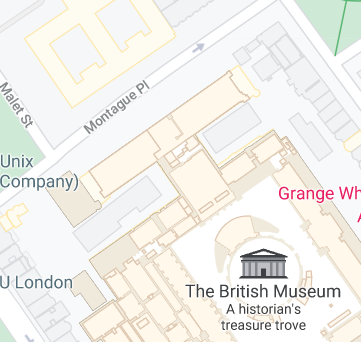
Montague Street. Holmes's famous abode before Baker Street. As it often happened, ACD wove some of his real life into the Holmes universe. Having left Southsea, young and recently married Conan Doyle went to study ophthalmology in Vienna and later moved to London in hopes of building a practice in the capital. His first address in London was in Montague Place:

Conan Doyle was in London before the end of March. He took lodgings in Montague Place, around the corner from the British Museum—and had Sherlock Holmes say in the story ‘The Musgrave Ritual’ several years later, ‘When I first came up to London I had rooms in Montague Street, just round the corner from the British Museum, and there I waited, filling in my too abundant leisure time by studying all those branches of science which might make me more efficient.’ (Arthur Conan Doyle: A Life in Letters)


What 'large issues' proved to be at stake in the Musgrave case? Did the finding of the Charles I crown become a sensation which contributed to Holmes's reputation as a private investigator? He does mention that there was some sort of litigation and a big sum of money involved for Musgrave to be able to keep the crown at his estate.

The way Reginald Musgrave is described, he is quite a queer-coded character: 'a young man of fashion', 'a bit of a dandy', 'languid and yet courtly manners'. Perhaps Holmes recognised him as a fellow queer man? Yet it doesn't seem that they were close: 'Once or twice we drifted into talk, and I can remember that more than once he expressed a keen interest in my methods of observation and inference.'

So Musgrave was interested in Holmes's methods and even admired him, but Holmes did not become friends with him. Well, Musgrave didn't have Watson's charm. Actually, he seems somewhat like Holmes: reclusive, aristocratic, and unsociable. And yet, some years after the university, they 'shake hands coardially'. I'm quite sure they saw each other as birds of a feather. I think Granada stresses this point especially by setting this story in later years instead of Holmes's youth and having a middle-aged Musgrave explicitly state that he is unmarried.

Another point that I noticed is the description of Brunton. It has mutually exclusive statements. At first he is characterised as 'a man of great energy', but by the end of the paragraph 'he was comfortable, and lacked energy to make any change'. Perhaps it depended whether or not he had energy? Quite energetic to become the head of the household staff, but not interested in a career of a scholar?
 
This story has this running gag of 'excitable Celts': Welsh, Irish, doesn't matter. It seems like Doyle did indeed believe in this stereotype as he said of himself:

'I am half Irish, you know,’ he once told one of London’s press lords, after losing his temper over a newspaper story, ‘and my British half has the devil of a job to hold the hotheaded rascal in.’ (Arthur Conan Doyle: A Life in Letters)
 
Despite Musgrave's aloofness, he is a considerate master: he tells Rachel to go to bed and not to work when he sees that she looks unwell. I suspect that not all employers were so attentive to their domestic help. 

I also find interesting this idea: 'A man always finds it hard to realize that he may have finally lost a woman’s love, however badly he may have treated her.' Quite femenist, considering that it comes from Doyle, isn't it?

And finally another thing I borrow from Observance of Trifles:

'And Brunton could hardly try to sell it [the crown] to a collector or a museum (or to the royal family) without revealing its provenance, which of course would reveal that he had stolen the booty. At best, that would likely mean he wouldn't get any money; at worst it would mean jail time.

Perhaps he planned to hide it, and then reveal to Musgrave what the ritual meant, and sell it back to him...I'm starting to think that maybe Brunton wasn't so smart, after all (Of course, if he were smart, he wouldn't have been caught going through family documents in the library like that...)'
luthienberen: (Default)
[personal profile] luthienberen
The Adventure of the Gloria Scott

--- The story begins with Sherlock Holmes offering to share an old case of his with Watson which I find remarkable. Watson initiated telling the world of Holmes’ scientific powers of deduction, but now Holmes himself is offering up a case prior to Watson’s acquaintance - his first ever one in fact.

Further, it is a valuable piece of history and for me signifies how comfortable Holmes must be now with Watson, because Watson states he has tried eking out older cases from Holmes to no avail :).

--- I do love that we have the image of them sitting by the fire on a winter’s evening in Baker Street ~ very homely.

--- The setting of the story is when Holmes spent two years in college, informative in of itself as his family must therefore have the monetary means to secure a position in university.

---Victor Trevor we discover was Holmes' only friend during this time and not because Holmes sought him, but due to Victor’s dog froze to his ankle.

Holmes is certainly more forgiving than me, because I would (a) panic if a dog froze to my ankle and (b) avoid said owner of dog and dog forever, but then I’m afraid of dogs so


He was also on his way to Chapel - I wonder which denomination? Perhaps Church of England?

--- Ooo we learn that Holmes has few athletic tastes (consistent with previous stories), bar fencing and boxing.

More Ruminations Below )
mightymads: (Default)
[personal profile] mightymads
The difficulty of the Holmes work was that every story really needed as clear-cut and original a plot as a longish book would do. One cannot without effort spin plots at such a rate. They are apt to become thin or to break. (Arthur Conan Doyle, Memories and Adventures)
STOCK is an example of just that. There was a deadline, and ACD had to come up with something, so he rehashed REDH in a not particularly creative way. He returned to the same plot device again much later in 3GAR. Still, STOCK has its moments.

- Holmes's description: "the high, somewhat strident tones of my old companion’s voice." Jeremy Brett channeled it masterfully. We all know that the main inspiration for Holmes was Dr. Joseph Bell. In a documentary book called The Ardlamont Mystery by Daniel Smith, Dr. Bell is described the following way:

"He was just as smartly attired as his Edinburgh colleague, and blessed with those hawkish features and piercing eyes that seemed to be able to penetrate into the very soul of a subject. Yet those who were not familiar with him may have been rather disconcerted by his slightly jerky gait as he made his way to the witness stand, and every bit as surprised by the high-pitched timbre of his voice when he began to speak. Yet to Doyle and the thousands of Edinburgh citizens who had encountered him as colleague, teacher or doctor over the years, these were characteristics that had long ago failed to warrant mention. In fact, they were the result of an episode that encapsulated Bell’s overwhelming desire to act for the greater good, even at significant personal cost.

In his role as surgeon at the Royal Hospital for Sick Children in the 1860s, Bell had keenly felt the dismay of his young diphtheria patients, particularly when they would cough and choke as they struggled for breath. Intent on finding some practical means to lessen their ordeal, he came up with a technique of sucking out the thick, grey-white coating that characteristically obstructs the back of the throat in diphtheria victims. He even developed a specially adapted pipette for the purpose. It was, however, a treatment with considerable risk attached, given the highly contagious nature of the disease. Late one night in June 1864, Bell was by his own admission feeling very tired and was perhaps less meticulous than usual. This was the occasion, he was convinced, when he himself contracted diphtheria as he made his ward rounds, which in turn led to a bout of post-diphtheritic paralysis resulting in his distinctive gait and vocal pitch."
 
- Holmes&Watson: Yet another instance when Watson is ready to drop everything and follow Holmes anywhere the moment Holmes shows up on Watson's threshold. Watson also tells us how easily Holmes reads him, they basically communicate without words. And their shared interest in strange cases: "unusual and outré features which are as dear to you as they are to me."

- Watson's practice which is better than that of his neighbour: Just how many people should have visited Watson's predecessor to literally wear out the steps so that it is visible with a naked eye? Three inches, seriously? If that's the case, why not replace such obviously shabby steps?

- Hall Pycroft on job hunting: "No one knows how these things are worked. Some people say that the manager just plunges his hand into the heap and takes the first that comes." Some 130 years later I have a feeling that this hasn't really changed.

- 126b Corporation Street: "Today, Corporation Street extends from New Street and its station for some two miles all the way to the site of Conan Doyle's home circa 1880. Clifton House, Aston Road is long gone, along with much of the Victorian city. A blue plaque, erected by the civic society, commemorates the author's residence in what was then still a village. These were formative years for Conan Doyle: as doctor, writer and man. He turned 21 as ship's surgeon aboard the Greenland whaler, Hope, during the first of two maritime adventures that punctuated extended periods in Aston as medical assistant to Dr Reginald Ratcliff Hoare who treated him more like a son than an employee. The family was represented at Conan Doyle's wedding to Jean Leckie in 1907. Hoare lives on as the inspiration for Dr Horton in "The Stark-Munro Letters"...and both doctors perhaps in Sherlock Holmes's identical morning habit of smoking the dottles of a previous night's pipes." (source)


Birmingham, Corporation Street 1890
 
-“We picked him out of the gutter, and he won’t leave us so easily.” I don't really understand why Pycroft gets so worked up about it. When you're out of job for a long time and become desperate, this is an adequate description of your situation.

- The advance Pycroft receives from the con artist: In today's money it's about £13,000. Not bad. At least he has something to live on until he finds another job.

- Why not hire some actor to impersonate the employer in Birmingham? They didn't have to tell him about their plan. They just could have said that they wished to pull a friend's leg or something. If they paid handsomely, I'm sure that the actor wouldn't have asked questions.

“The paper! Of course!” yelled Holmes, in a paroxysm of excitement. “Idiot that I was! I thought so much of our visit that the paper never entered my head for an instant. Holmes isn't omniscient. He can't think of everything at once, especially when events unfold very fast. That's very human and true-to-life. Had it been Poirot, this little detail wouldn't have escaped his attention. Poirot is way too perfect. 

- And then Holmes asks Watson to read the newspaper aloud because that's what Watson does in their partnership. Holmes surely likes to hear Watson's voice. There was also a suggestion on tumblr that perhaps Holmes is dyslexic. An interesting possibility, isn't it? 
mightymads: (Default)
[personal profile] mightymads
Recently I watched this ITV mini-series and thoroughly enjoyed it. It is based on the novel by Julian Barnes. I haven’t read it, so I cannot say how closely to the book it was written, but I did read ACD’s autobiography Memories and Adventures, a collection of his correspondence Arthur Conan Doyle: A Life in Letters, and a biography by Daniel Stashower Teller of Tales: The Life of Arthur Conan Doyle.

Judging by what I gathered from these three sources, the mini-series is quite historically accurate, describing the period of ACD’s life when he suffered depression after the passing of his first wife and how the Edalji case helped him to cope by giving him a purpose. In the series, just as in real life, ACD dedicated a lot of energy to investigating the case of a wrongly accused half-Parsi half-English solicitor George Edalji and launched a high-profile media campaign to clear Edalji’s name. And while the series has a fictional side to it, with pursuits and fights, it was great to see the real life aspects covered, like Arthur’s relationship with Jean Leckie, his wife-to-be, and the disapproval from his sister Connie and her husband E. W. Hornung (albeit this aspect was somewhat different in real life). The series even includes the small detail that George Edalji was invited to Arthur and Jean’s wedding.

There is a distinct Holmes-Watson dynamic between ACD and his secretary major Alfred H. Wood as they run around investigating, which was an endearing touch. All in all, I think the series is a nice blend of fact and fiction. Even though Martin Clunes seems a bit long in the tooth for the role, it doesn’t matter much. He bears a striking resemblance to ACD in Doyle’s older years. I wonder why, though, the series turns the Edalji case into a story of personal feud rather than racial prejudice as it was in real life. Otherwise it’s a very well-made period drama.


mightymads: (Default)
[personal profile] mightymads
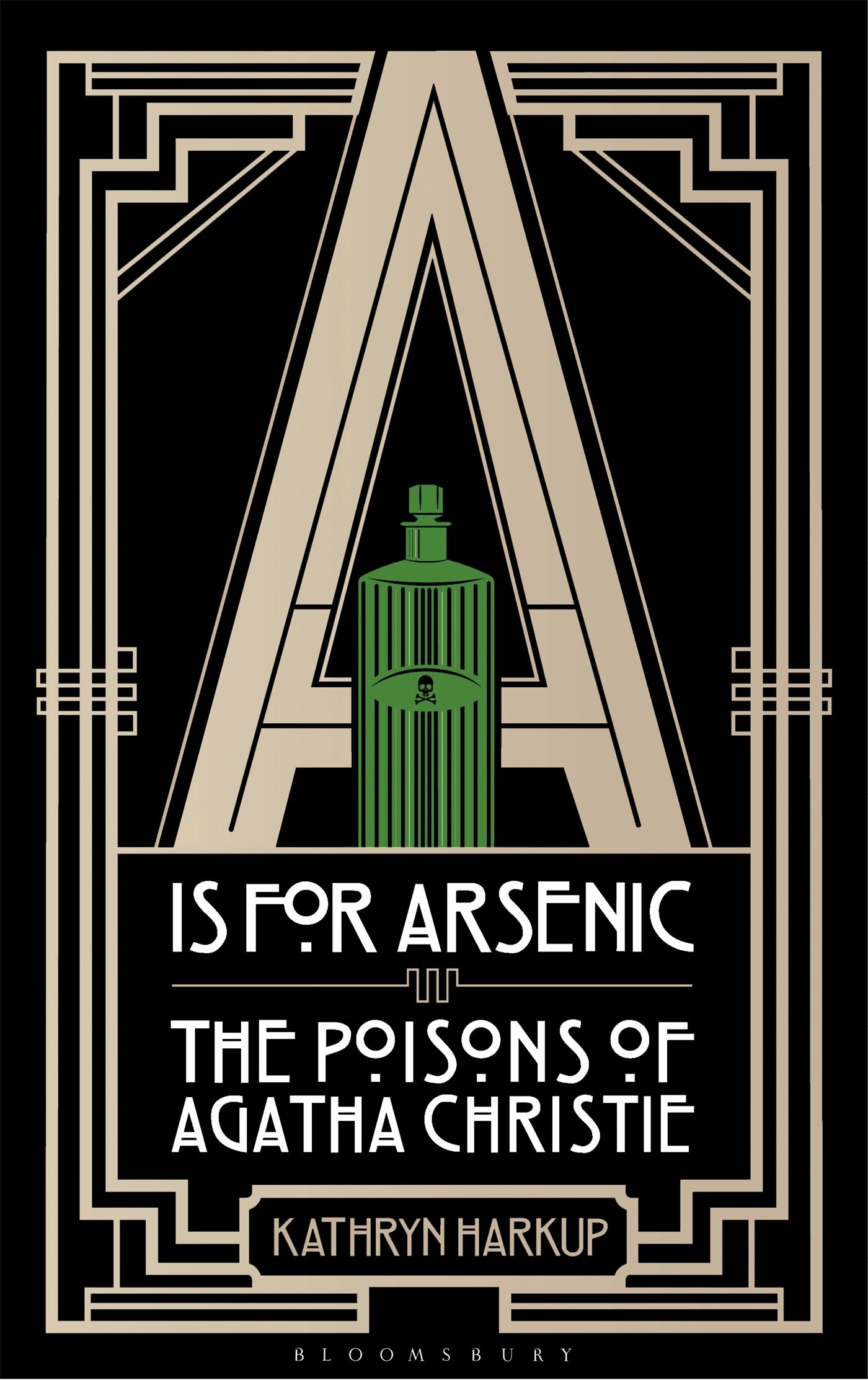
A is for Arsenic: The Poisons of Agatha Christie is a handy little book if you write a casefic and need a clear, informative reference about poisons. According to her official website, Dr. Kathryn Harkup is “a science communicator, chemist and vampirologist. She completed a doctorate on her favourite chemicals, phosphines, and went on to further postdoctoral research before realising that talking, writing and demonstrating science appealed a bit more than hours slaving over a hot fume-hood. She writes and gives regular public talks on the disgusting and dangerous side of science.

In this book Dr. Harkup discusses poisons which Agatha Christie used in her plots, accuracy of her writing, real-life cases which might have inspired Christie or even might have been inspired by her novels, and the way those poisons work inside the body. To be honest, sometimes I had to skip the scientific parts of the book to keep on reading, but the history of poisons and real-life cases were fascinating.

There are a couple of notable quotes characterising Agatha Christie as a writer, especially if compared with Arthur Conan Doyle:
“Christie always considered herself a ‘popular’ writer, and acknowledged that she did not produce great works of literature or deep insights into the human condition.”
and
“Christie also corresponded with experts to check her facts. For example, in 1967 she wrote to a specialist asking about the impact of putting thalidomide in birthday-cake icing – how long would it take to make an impact? How many grains would be needed? However, this idea was never used in any of her stories.”
So Christie didn’t entertain an ambition to become a writer of “serious” books, but she respected her audience and strived to excel in her chosen niche. She checked her facts, even though she didn’t consider her writing to be a “respectable” branch of literature. What a stark contrast, isn’t it? Doyle could obsess over the correctness of uniforms in his Brigadier Gerard stories but never bothered to find out basic facts about snakes for a Holmes instalment. I often wonder whether it was a blessing in disguise. Would Holmes stories have been that good had Doyle taken them seriously? I couldn’t bring myself to read any of his historical novels except Rodney Stone which was rather mediocre.


mightymads: (Default)
[personal profile] mightymads
It's a great story on so many levels! Holmes and Watson's interaction is beautiful: Holmes highly values Watson's input in the case and considers Watson's involvement a great favour. We also have glimpses of Holmes's fallible, human side: he states himself that he'd made a blunder and that he is far from the image of the ideal reasoner he would like to be, that which Watson presents in the stories. Watson is always low-key about his own merits, but this story is one of the best examples how Watson complements Holmes to perfection. He hears out Holmes's reasoning which helps Holmes to have a clear picture (the way Watson does it, though: "I lay back against the cushions, puffing at my cigar..." Quite a languid Bohemian, isn't he?). Then Watson offers his medical expertise, confirming Holmes's conjectures, and identifies the cataract knife for what it is—an instrument for a delicate operation (no doubt here ACD's own training in ophthalmology came in handy)—and thus pushes Holmes into the right direction. He also observes the returning trail of footsteps while Holmes is focused on the other trail and fails to notice it. His help is so substantial, but he, as always, just waves it off and gives all the spotlight to Holmes, like a modest and loving partner he is.

Watson is fiercely protective of Holmes and just has to retort when Colonel is disdainful towards Holmes. I'm pretty sure the exchange between the Colonel and Watson would have escalated to high words had not Holmes entered the room. As ever, Watson reads Holmes excellently: he can tell that Holmes arrived at some conclusions, and it is he who touches Holmes lightly, arousing him from the reverie. When Holmes solves the case, he playfully pinches Watson's arm, and Watson has no objection whatsoever about pranking the Colonel who wasn't nice to Holmes.

In this story Holmes's "ear-flapped travelling cap" makes an appearance. I googled it for fun, and it seems that rather than a deerstalker it could be this:


or this:


See this tumblr post for more interesting info.

This story features another reference to Romani people as a red herring. There was already one in SPEC, so this becomes a running gag of sorts.

£37 in 1888 is £4,845.30 in 2019. Quite a costly dress indeed!

Now to inaccuracies in this story. In his autobiography ACD himself admitted that he knew next to nothing about horse racing and didn't bother to research:
Sometimes I have got upon dangerous ground where I have taken risks through my own want of knowledge of the correct atmosphere. I have, for example, never been a racing man, and yet I ventured to write "Silver Blaze," in which the mystery depends upon the laws of training and racing. The story is all right, and Holmes may have been at the top of his form, but my ignorance cries aloud to heaven. I read an excellent and very damaging criticism of the story in some sporting paper, written clearly by a man who did know, in which he explained the exact penalties which would have come upon every one concerned if they had acted as I described. Half would have been in jail and the other half warned off the turf for ever. However, I have never been nervous about details, and one must be masterful sometimes. When an alarmed Editor wrote to me once: "There is no second line of rails at that point," I answered, "I make one." On the other hand, there are cases where accuracy is essential.
Naturally, I had to find out what exactly was wrong. This is a superb explanation, with lots of in-depth info. Highly recommend it!
mightymads: (Default)
[personal profile] mightymads
It’s nice to return to Holmes and Watson and see how kind Holmes is to Watson. At the conclusion of the case Holmes invites Watson to come along with him to the police station since Watson is interested in the case. Holmes keeps including Watson into the action. It’s so considerate of him.

When asked about his actor friend, Hope declines to answer. Frankly, I’d like to know who that person is. I’d love to see Holmes tracing him. This would have made an excellent action sequence and another demonstration of Holmes’s deductive powers. This would work instead of the forced Mormon narrative! As we discussed in the previous post, having John and Lucy’s backstory told from Hope’s POV would be much neater, with all the unlikely and inaccurate things cut. Somehow, I can’t help mentally editing the second part of STUD to make it less awkward.

Back to the London part, it’s weird that Hope, having smelled a rat in the advertisement about the found ring, nevertheless had no suspicion when summoned by a street urchin to the very same address. But considering the previous American chapters, perhaps it’s not that surprising. Hope is a thickhead. Regarding the pills and an equal chance for the persecutor and the persecuted—that’s ACD’s notion of chivalry, isn’t it? Practically, though, it’s very silly. It would have been terribly ironic if Drebber had chosen the harmless pill and Hope had been compelled to eat the poisonous one.

In the last chapter Holmes explains to Watson his train of thoughts which was a revolutionary thing at that point. Very few detective novels did that at the time, and that was one of the factors which made Holmes legendary. His supposition that Hope wouldn’t change his name while travelling in Europe was a bit of a stretch. Hope could have easily done that. But, Hope being Hope, didn’t. The Mormon part aside, STUD is fantastic. It draws me in time and time again. When I was searching for inspiration while trying to write a mystery in another fandom, I read The Mysterious Affair at Styles (the first Poirot novel) and STUD. The difference was colossal. And while I enjoy Agatha Christie, after re-reading STUD a couple of years ago, I found myself in the Holmes fandom.
luthienberen: (Default)
[personal profile] luthienberen
I haven't too many notes on these chapters, but the main points that stuck with me are:

Chapter 4&5

John Ferrier goes to Salt Lake City where he entrusts an acquaintance to pass his letter to Jefferson Hope. He feels lighter because of this and returns home.

As stated previously by [personal profile] mightymads this feels terribly out of character for a man who built a successful farm, was a wise hunter and guide. He clearly comprehends the danger his daughter is in for (a) he sends the letter to Hope and (b) when he returns home he encounters Strangerson and Drebber.

I admit, considering his situation his loss of temper at them feels unwise.

Indeed, his fears of being spirited away questions even more strenuously why he waited for Hope and did not snatch Lucy and ride hell to leather to the US Military who were stationed 50 miles away and would protect them from the Mormons as [personal profile] sanguinity said here.

By the time Hope arrives the situation is desperate with their house watched. This causes me to seriously think that if Ferrier had only kept his temper and played along earlier he could have slipped off with Lucy with little trouble.

Their escape is grim and certainly tragic, but knowing they had realistic options to successfully flee their captors just tarnishes what occurs.

I think this entire tale would have been better served as a standalone story with Doyle able to devote proper research (and a happier ending!). As it stands, the lack of research undermines this background which gives us a sympathetic reason for Hope's murders.

Lucy is the true victim here and an unnecessary one, as is her father's death.
mightymads: (Default)
[personal profile] mightymads
My notes will be very brief for this part. Geographic inaccuracies in Doyle’s descriptions of America are neatly summarised in this essay by one of the Baker Street Irregulars. Still, I’d really like to know what American readers think of this part of the story. According to another source, Doyle’s portrayal of Mormons was most likely based on sensational press of that time. Again, I know next to nothing about Mormons and doubt that a Wikipedia article can substantially change that, so if anyone can give their expert opinion, please do share it! :)

Re: the plot itself, John Ferrier, Lucy’s adoptive father, is a baffling character. On the one hand, he is outlined as a seasoned adventurer, a self-reliant and self-sufficient man. On the other, he is a classic damsel in distress in the way he handles the proposal situation. One would expect from such a resourceful guy to come up with a plan to sneak away from his so-called benefactors long before the matter became pressing. He disagreed with their way of life and had concerns about Lucy’s future. Why didn’t he do anything? He had years to turn his possessions into cash and flee. What was he counting on if he knew how ruthless and despotic the rules in his new settlement were? What if Lucy never met Jefferson?

Or, okay, let’s imagine that he hoped that the problem would miraculously solve itself. But then Lucy is harassed and given a month to decide. A month, Carl! It’s not like they whisk her away at once. Again, Ferrier does nothing except sending a message to Jefferson, wtf. In those days before mobile phones and internet things could easily go wrong: the message might not be delivered or something could have happened to Jefferson. And if their harassers managed to get inside the house to leave warnings without being noticed by old Ferrier, he really must have been over the hill by then.

A side note: John and Lucy meet the Mormons on May 4, 1847. 1847 was indeed the year when a large group of Mormons led by Brigham Young travelled to Utah. Also, if we consider that Sherlock Holmes was born in 1854, his brother Mycroft, 7 years his senior, was born in 1847. And a few decades later May 4 will be the Reichenbach day.
luthienberen: (Default)
[personal profile] luthienberen
Apologies for the delay due to life! Hopefully, my scribbles on the next part of STUD will incur forgiveness. Looking forward as ever to your opinions =^_^=

My ramblings )
mightymads: (Default)
[personal profile] mightymads
Chapter 3

- The case hasn’t started yet but Watson already suspects that Holmes shows off to impress him. Of course, as Watson will find out later, Holmes would never stoop so low as to set up his deductions. Still, Holmes does want to impress Watson and does show off;

- A very important detail: Holmes apologises for his rudeness to Watson. Yes, he has a moment of short temper but he apologises immediately;

- Watson discovers Holmes’s partiality to admiration from him. Holmes asks Watson to read aloud Gregson’s message he had just read himself. What for? To enjoy Watson’s voice, apparently;

- Gregson has a great deal of respect for Holmes, judging by the letter. He values Holmes as a talented detective whereas Lestrade remains skeptical for many years to come, until that heartfelt praise in SIXN. It’s funny that Holmes compares Gregson and Lestrade to a pair of professional beauties when Watson says something very similar about him, that he’s like a girl sensitive to compliments;

- Holmes is reluctant to take the case despite being bored! But he does so at Watson’s request. Note how excited Watson is, even though he stated earlier that he had enough of excitement and noise until the end of his natural existence. Watson is in the habit of contradicting himself from the very start XD;

- Holmes takes Watson along with him to entertain his new friend who is clearly interested in the case. Also, Holmes’s apathy is quickly dispelled whereas Watson feels down. Holmes clearly wants to distract him from brooding which is very kind;

- Holmes's artistic side shows itself: he prattles about violins, music, and uses artistic jargon to name the case. Meanwhile, Watson's grows more convinced that Holmes is a poser seeing Holmes’s theatricality. Jeremy Brett channeled it brilliantly.

- The class difference between Holmes and the police detectives: Holmes, despite being broke, virtually unknown, and younger than Gregson, is a gentleman, middle or upper-middle class whereas Gregson is working class, so Gregson addresses Holmes accordingly;

- The state of Watson’s nerves: he is shaken by the sight of death (“I have seen death in many forms, but never has it appeared to me in a more fearsome aspect”, “room, the atmosphere of which felt clearer since the removal of its ghastly inmate.”)

- Holmes’s description while on the scent: a crackpot, isn't he? With all those mutterings to himself, crawling all over the place, etc. But Watson compares him to a foxhound;

- “With which Parthian shot he walked away, leaving the two rivals open-mouthed behind him.” - This is basically a Victorian equivalent of mic dropping.
The Parthian shot is a light horse military tactic made famous in the West by the Parthians, an ancient Iranian people. While in real or feigned retreat their horse archers would turn their bodies back in full gallop to shoot at the pursuing enemy. (Wikipedia)


Chapter 2

- Watson has a good grasp of the facts: he mentions all main points of the case and difficulties arising from the findings. This proves that Watson is a smart participant, not just tagalong, and Holmes praises him; 

- That epic moment when Holmes is reluctant to reveal much, fearing to lose Watson’s interest, but Watson professes his full devotion, and Holmes is all melted;

- When they visit Constable Rance, we are shown the typical living conditions of working-class people; 

- Despite Holmes’s sternness with Constable Rance, Holmes doesn’t call him “a blundering fool” in his face. Holmes is not that arrogant or bad-mannered!
luthienberen: (Default)
[personal profile] luthienberen
A Study in Scarlet

Chapter 1 - Mr Sherlock Holmes


Welcome to a canon read of A Study in Scarlet! [personal profile] mightymads and I will be taking it in turns to make notes on the chapters and post in alternating manner each week.

Please feel free to comment and post your insights and general chit-chat - we would love to hear from you!

Warning! A long set of notes for Chapter 1, merely due to setting the scene! I promise I will be briefer in my observations from Chapter 2 onwards.

So, Chapter 1, herein begins the tales of Dr John Watson and Mr Sherlock Holmes.

Chapter 1 - Mr Sherlock Holmes )

Chapter 2 - The Science of Deduction )
luthienberen: (Default)
[personal profile] luthienberen
This tale is one of the creepiest in my opinion and quite unsettling, so forgive me for skirting around the case! I shall leave that to braver souls than I.

Date

There appears to be no overt clue here, beyond that it may be early on in their acquaintance since Watson doesn't mention his wife.

Yet in contradiction to the above Holmes later refers back to SCANDAL, Mary Sutherland, Twisted lip and the Noble Bachelor which places this tale at least after those. In three of these Watson is apparently married and Noble meant to be soon. Here though no mention is made of this.

Amusing if perplexing!

Doyle clearly didn’t keep ordered notes, making Watson a rather unreliable narrator who plays his audience wonderfully.

Holmes&Watson etc. )
mightymads: (Default)
[personal profile] mightymads
A few notes on this story. For some reason, I don’t have much to submit when it’s my turn to write a post XD Nevertheless, I learned an important detail for writing while reading BERY. Had to go through all of my fics and fix it, d’oh! But let’s start from the beginning.

Holmes & Watson. Their interaction is sweet and lovely in this story too, as it was in the previous ones.

- There’s Watson’s dry humour: “Holmes, here is a madman coming along...”;

- His faith in Holmes which is surely a powerful emotional support for Sherlock: “I had such faith in Holmes’s judgment...” Despite seeing no way out of the situation, he believes in Holmes and relies on him to find a solution without a shade of doubt;

- Watson easily reads every Holmes’s mood. Despite not knowing what exactly is on Holmes’s mind, he can see the gears in his head working and can tell whether Holmes has a progress in his investigation or not;

- This story is also a rare instance when Watson actually tries to prod Holmes with questions about the case but Holmes is evasive. Usually Watson just waits when Holmes is ready to tell all;

- We also get a glimpse of Watson’s circadian rhythm. In the previous stories we observed that he is a late riser, 7.15 in the morning being outrageously early for him. Here he waits for Holmes until midnight and then comes down for breakfast after nine which is quite late. It seems like both Holmes and he are night creatures when given a preference.

Holmes, from his side values Watson’s presence highly. He insists on Watson’s accompanying him to Mr. Holder’s house and expresses his regret when he can’t take Watson along with him on an outing to investigate further. As always, they work smoothly as a team: Watson does a small talk part with Mr. Holder which allows Holmes to think and spares him being distracted by the chatty client.

- This story is another proof that Holmes doesn’t forget entirely about food when he is done with his thinking. He makes himself a sandwich before going out;

- I rather liked Holmes’s playfulness when Holmes is in a good mood: “However, I must not sit gossiping here, but must get these disreputable clothes off and return to my highly respectable self.”

- And again Holmes is very compassionate and empathetic in this story. Holmes does everything do soothe the agitated Mr. Holder when he first comes to Baker Street. Holmes makes him comfortable and talks to him gently. He clearly knows how to handle a person in distress. “The cold jerk” stereotype really must go.

- The minor point which I found important: Holmes’s bedroom is also upstairs, most likely next to Watson’s, and not on the same floor as the sitting-room. “He hurried to his chamber and was down again in a few minutes dressed as a common loafer.” It is even more convenient for shippy fics. Their rooms are adjacent which makes a rather short, inconspicuous trip at night.

The case. I would have never entrusted any precious valuables of my own into Mr. Holder’s care. What was the point in carrying the coronet with him? Someone could watch him and attack him on the street. He told about the coronet to his family members, knowing that at least one of them has money issues. He put the coronet into a place which practically begs to be burgled! A soundless lock which can be opened with any key, really?

In this story a man takes the blame to protect the lady he loves, just like in BOSC. Arthur Holder, being ACD’s namesake, seems to have similar ideas about chivalry which overrules common sense. This is also an example of ACD’s misogynistic views: not only women can betray their family for a lover. This time, though, Holmes does express overtly his prejudice against women while in most stories he is nice to them and we are just told by Watson that he doesn’t like them.

And lastly, this Sidney Paget illustration. Mary Holder ignores Watson, and Watson seems so pissed off that he is about to hit her with a chair XD

luthienberen: (Default)
[personal profile] luthienberen
Hello All!

Just a few notes on The Noble Bachelor today on points that stood out for me =^_^=

Date

According to Watson this is set a few weeks before his marriage and in autumn for "I had remained indoors all day, for the weather had taken a sudden turn to rain, with high autumnal winds
"

So, either this is very late 1888 or 1889? What do the members of this community think?

Watson is writing this four years later so most likely between 1892-93, so after Holmes is lost to him :(.

Watson's wound

Further to the above, Watson mentions the autumn weather affecting his wound: "...the jezail bullet which I had brought back in one of my limbs as a relic of my Afghan campaign throbbed with dull persistence."

Poor Watson! Yet also, I am amused that here ACD was vague as to where the bullet hit ;)

Holmes & Watson

-Holmes relying on Watson to post him up on the latest in papers due to Watson being stuck indoors all day reading the newspapers. It is a lovely dip into their friendship :)

-Watson mentions his upcoming marriage at the beginning of the story, but apparently either Holmes forgot or is in denial, because the tale finishes with Holmes declaring:

"Ah, Watson...perhaps you would not be very gracious either, if, after all the trouble of wooing and wedding, you found yourself deprived in an instant of wife and fortune
and thank our stars that we are never likely to find ourselves in the same position. Draw your chair up and hand me my violin, for the only problem we have still to solve is how to while away these bleak autumnal evenings."

The other reason could be due to Watson forgetting himself considering inconsistency is his middle name...or Doyle, but it does grant us fans wriggle room when writing!

Case

-The case begins with a very "fashionable epistle" according to Watson, to which Holmes remarks is usually a dull affair and that "the humbler are usually the more interesting."

Naturally, in this instance that isn't true. However, what I find more fascinating is that Holmes receives correspondence from fish-mongers and a tide-waiter* which suggests that by now, Holmes' practice and reputation is well established. Thanks in part, perhaps to Watson, as well as word of mouth?

*According to merriam-webster a tide-waiter was/is:

"a: an officer in various preventive customs services who boards ships and watches the landing of goods
b: any customs inspector working at dockside or aboard ships"
https://www.merriam-webster.com/dictionary/tidewaiter

-My sympathies are mixed on this because I do feel for everyone involved. While I do not like Lord St. Simon, I agree with Holmes that it would be hard for him to react particularly nobly given the circumstances, so do feel sorry for the man.

I am curious as to what the members of this community thought of this story?
mightymads: (Default)
[personal profile] mightymads
Not many notes again, but there are some curious details about this story.

Watson mentions that it is one of only two cases which he brought to the attention of Holmes, the other being concerned with the madness of Colonel Warburton. Apparently, Watson forgot about the case of the Naval Treaty which was published a year later (obviously, ACD had no idea what he would write a year later, but anyway, Inconsistency is his middle name).

1. Watson doctoring

Yet another story where we see Watson busy with his practice. It’s frankly surprising that all of these instances were cancelled out by his single statement in NAVA that his practice is never absorbing. He could have said that just to please Holmes, right?

I was awakened by the maid tapping at the door to announce that two men had come from Paddington and were waiting in the consulting-room” - On the one hand it was considered to be normal for Victorian spouses to sleep in different rooms, but on the other, hmmm

2. Holmes’s empathy

This story is another amazing example of Holmes’s kindness to people. He goes out of his way to take care of Mr. Hatherley: provides him with a breakfast, has him lie down on the sofa, pours him some whiskey and water, and asks him to tell his story but not to overexert himself. I need a Holmes adaptation which always demonstrates how kind and empathic he is!

3. Colonel Lysander Stark is very creepy

Okay, I understand that Mr. Hatherley was desperate for a job. Man, I am, too, and I often encounter strange characters during the past two and a half years of job hunting. At one point Mr. Hatherley is so disturbed by Stark’s behaviour that he almost listens to his instincts to run away screaming from that weirdo.

I was the only passenger who got out there, and there was no one upon the platform save a single sleepy porter with a lantern.” - This is straight from a horror movie, seriously

The way Mr. Hatherley was delivered to the Colonel’s house was later rehashed almost verbatim in GREE. ACD wasn’t a particularly scrupulous fellow.

Why did they need such a big press to produce fake coins anyway? Literally big enough to crush a grown person. Wasn’t it inconvenient to construct it and keep it secret? Perhaps they burned the house themselves for the sake their safety rather than the fire was caused by Hatherley’s lamp? For comparison, the forgery machine in 3GAR was portable, and the fake Garrideb came to take it.

Lastly, I’d like to say that this story was very well incorporated into the theme of German spies and WWI in the Soviet series. It could also be Moriarty’s doing. I wish there was a Granada adaptation of it.
luthienberen: (Default)
[personal profile] luthienberen
Hello All :-)

Thank you to everyone who has joined in with the Canon Sherlock Holmes re-read so far. Please feel free to partake at any point or to check out previous discussions.

Discussion on previous read throughs can be found using the tag "readalong".

Our next Canon story will be 'The Engineer's Thumb' starting from Tuesday, 11th August. :=)

Posts are open to all members and for commenting, whether it is on the entire story or a particular fact or aspect of the story you found meaningful.

Please refer to this comment for online access to the Canon tales - thank you [personal profile] recently_folded!

Profile

victorian221b: 221b (Default)
Victorian 221b

February 2023

S M T W T F S
   1234
567891011
12131415161718
19 202122232425
262728    

Syndicate

RSS Atom

Most Popular Tags

Style Credit

Expand Cut Tags

No cut tags
Page generated Mar. 28th, 2026 02:19 am
Powered by Dreamwidth Studios