The Whole Art of Detection: a review
Aug. 27th, 2019 08:22 pm![[personal profile]](https://www.dreamwidth.org/img/silk/identity/user.png) mightymads posting in
mightymads posting in ![[community profile]](https://www.dreamwidth.org/img/silk/identity/community.png) victorian221b
victorian221bThis last week of mad summer I’m catching up with reading and the Victorian Holmes community. As promised, a review for another book by Lyndsay Faye. The Whole Art of Detection was written after Dust and Shadow, and while earlier stories retain the enthusiasm and passion which are palpable in the novel, it seemed to me that by the second half of the book the author lost her zeal. The stories are divided into four periods: Before Baker Street, The Early Years, The Return, and The Later Years.
I was absolutely delighted by the first two sub-collections. The Case of Colonel Warburton’s Madness is the opening story, and it’s Faye’s take on an untold tale mentioned in the canon. There is another version in the Bert Coules series, and I can’t pick which I like better—for me both are equally strong and entertaining. Some goodgreads reviews mentioned that Faye’s story is a bit historically inaccurate. It may be so, but the story isn’t any less enjoyable because of that. We all remember the occasions in the canon when Holmes entertains Watson by anecdotes of his early years. This time it’s Watson who distracts Holmes from ennui by presenting him with a conundrum the doctor was wondering about for years.
The next story is The Adventure of The Magical Menagerie which offers us a glimpse of young Sherlock honing his craft and meeting Sherman the bird-stuffer, owner of Toby from SIGN. Sherlock in his early twenties is such an adorable minx that it’s an absolute highlight of the tale.
The Adventure of The Vintner’s Codex is also a reminiscence of Holmes’s younger days, and the plot is very good, quite in the spirit of the canon.
While The Adventure of The Honest Wife is in the best traditions of the canon too, simultaneously it has a feminist theme which is more of a nod to our time.
Memoranda Upon The Gaskell Blackmailing Dilemma is similar to The Honest Wife, its theme being a woman pushed into a miserable marriage, and the plot is not quite fresh, but the story is delightful for another reason I’ve already mentioned in the previous post.
Starting from the post-Reichenbach era, the pastiches go downhill, I’m afraid. Plots are thinner and characterisations don’t always work for me. However, the atmosphere of John’s loneliness and his state of mind are done well. There are hardships of the reunion and John mourning Mary, so if your headcanons coincide, you might like many moments.
As for the final part of the book, frankly, I just skimmed through it. The stories seem to have lost all their flair. I’m especially partial to older Holmes and Watson, but there was none of the Sussex goodness either. Perhaps Faye didn’t have the passion by the end or it was directed into other creative channels.
All in all, I had a nice impression of the book. Differences from ACD’s style are plentiful, and it seems that characterisations are often influenced by films and TV-series (Granada and Rathbone Holmes in particular) rather than by the canon only, but I had a good time and now feel much refreshed.
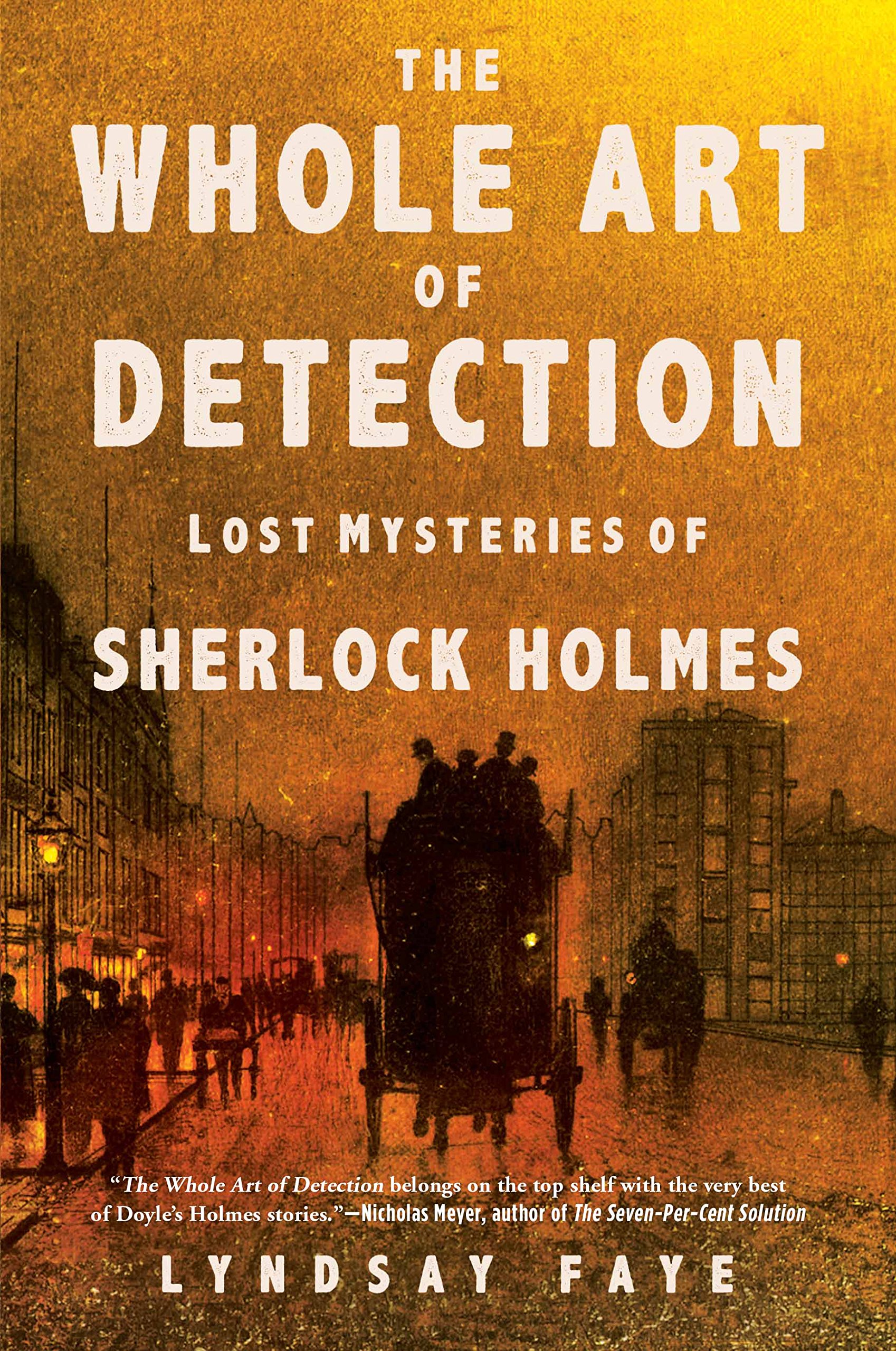
I was absolutely delighted by the first two sub-collections. The Case of Colonel Warburton’s Madness is the opening story, and it’s Faye’s take on an untold tale mentioned in the canon. There is another version in the Bert Coules series, and I can’t pick which I like better—for me both are equally strong and entertaining. Some goodgreads reviews mentioned that Faye’s story is a bit historically inaccurate. It may be so, but the story isn’t any less enjoyable because of that. We all remember the occasions in the canon when Holmes entertains Watson by anecdotes of his early years. This time it’s Watson who distracts Holmes from ennui by presenting him with a conundrum the doctor was wondering about for years.
The next story is The Adventure of The Magical Menagerie which offers us a glimpse of young Sherlock honing his craft and meeting Sherman the bird-stuffer, owner of Toby from SIGN. Sherlock in his early twenties is such an adorable minx that it’s an absolute highlight of the tale.
The Adventure of The Vintner’s Codex is also a reminiscence of Holmes’s younger days, and the plot is very good, quite in the spirit of the canon.
While The Adventure of The Honest Wife is in the best traditions of the canon too, simultaneously it has a feminist theme which is more of a nod to our time.
Memoranda Upon The Gaskell Blackmailing Dilemma is similar to The Honest Wife, its theme being a woman pushed into a miserable marriage, and the plot is not quite fresh, but the story is delightful for another reason I’ve already mentioned in the previous post.
Starting from the post-Reichenbach era, the pastiches go downhill, I’m afraid. Plots are thinner and characterisations don’t always work for me. However, the atmosphere of John’s loneliness and his state of mind are done well. There are hardships of the reunion and John mourning Mary, so if your headcanons coincide, you might like many moments.
As for the final part of the book, frankly, I just skimmed through it. The stories seem to have lost all their flair. I’m especially partial to older Holmes and Watson, but there was none of the Sussex goodness either. Perhaps Faye didn’t have the passion by the end or it was directed into other creative channels.
All in all, I had a nice impression of the book. Differences from ACD’s style are plentiful, and it seems that characterisations are often influenced by films and TV-series (Granada and Rathbone Holmes in particular) rather than by the canon only, but I had a good time and now feel much refreshed.


no subject
Date: 2019-08-27 11:49 pm (UTC)no subject
Date: 2019-08-28 03:52 am (UTC)no subject
Date: 2019-08-28 05:29 pm (UTC)no subject
Date: 2019-08-28 05:34 pm (UTC)What books did you try to get into before? Dust and Shadow or this one? What was it in them that didn't work for you?
no subject
Date: 2019-08-28 05:44 pm (UTC)no subject
Date: 2019-08-28 05:50 pm (UTC)no subject
Date: 2019-08-28 05:54 pm (UTC)no subject
Date: 2019-08-28 05:55 pm (UTC)