Book review: A is for Arsenic
Oct. 22nd, 2020 03:02 pm![[personal profile]](https://www.dreamwidth.org/img/silk/identity/user.png) mightymads posting in
mightymads posting in ![[community profile]](https://www.dreamwidth.org/img/silk/identity/community.png) victorian221b
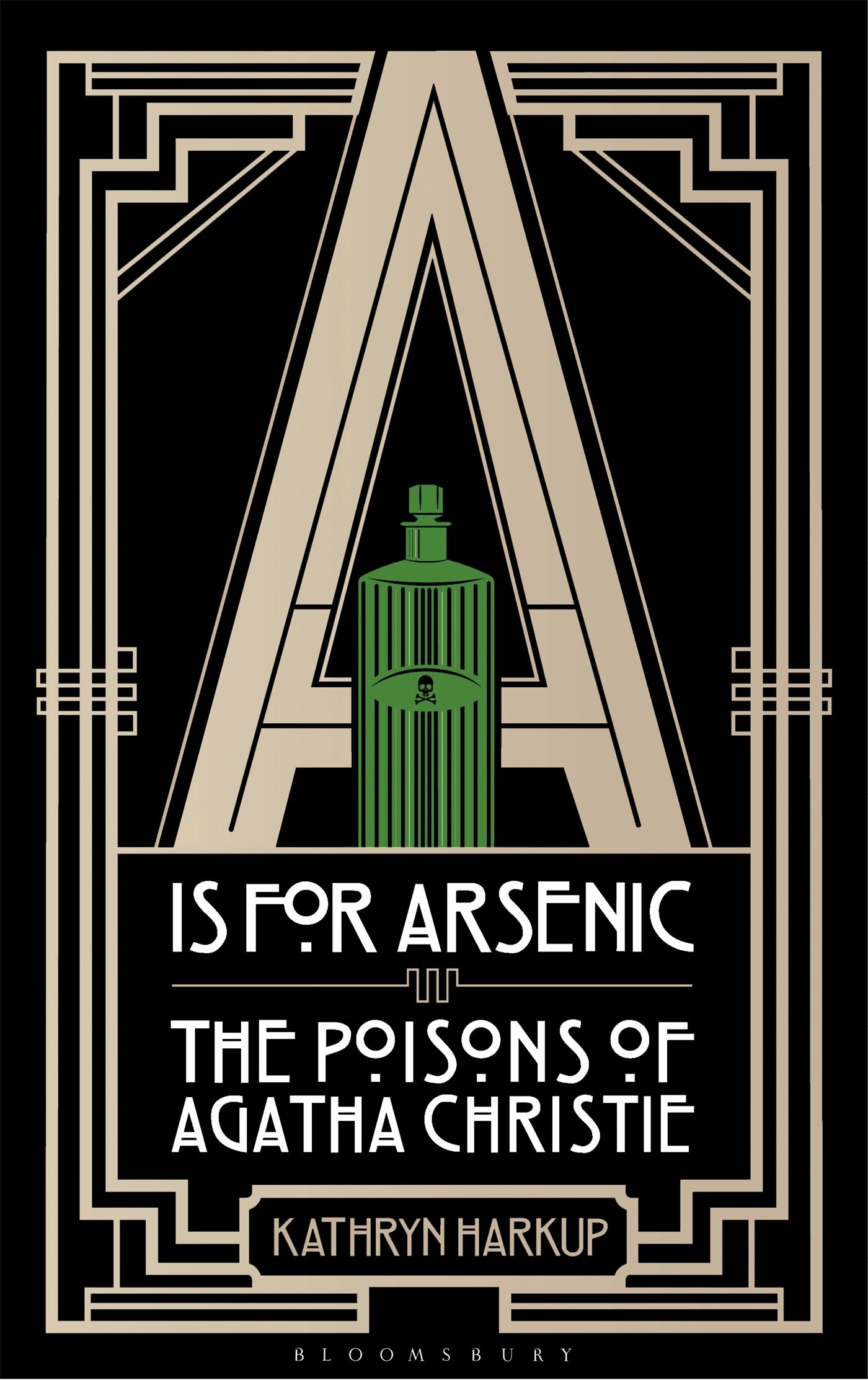
victorian221bA is for Arsenic: The Poisons of Agatha Christie is a handy little book if you write a casefic and need a clear, informative reference about poisons. According to her official website, Dr. Kathryn Harkup is “a science communicator, chemist and vampirologist. She completed a doctorate on her favourite chemicals, phosphines, and went on to further postdoctoral research before realising that talking, writing and demonstrating science appealed a bit more than hours slaving over a hot fume-hood. She writes and gives regular public talks on the disgusting and dangerous side of science.”
In this book Dr. Harkup discusses poisons which Agatha Christie used in her plots, accuracy of her writing, real-life cases which might have inspired Christie or even might have been inspired by her novels, and the way those poisons work inside the body. To be honest, sometimes I had to skip the scientific parts of the book to keep on reading, but the history of poisons and real-life cases were fascinating.
There are a couple of notable quotes characterising Agatha Christie as a writer, especially if compared with Arthur Conan Doyle:
In this book Dr. Harkup discusses poisons which Agatha Christie used in her plots, accuracy of her writing, real-life cases which might have inspired Christie or even might have been inspired by her novels, and the way those poisons work inside the body. To be honest, sometimes I had to skip the scientific parts of the book to keep on reading, but the history of poisons and real-life cases were fascinating.
There are a couple of notable quotes characterising Agatha Christie as a writer, especially if compared with Arthur Conan Doyle:
“Christie always considered herself a ‘popular’ writer, and acknowledged that she did not produce great works of literature or deep insights into the human condition.”and
“Christie also corresponded with experts to check her facts. For example, in 1967 she wrote to a specialist asking about the impact of putting thalidomide in birthday-cake icing – how long would it take to make an impact? How many grains would be needed? However, this idea was never used in any of her stories.”So Christie didn’t entertain an ambition to become a writer of “serious” books, but she respected her audience and strived to excel in her chosen niche. She checked her facts, even though she didn’t consider her writing to be a “respectable” branch of literature. What a stark contrast, isn’t it? Doyle could obsess over the correctness of uniforms in his Brigadier Gerard stories but never bothered to find out basic facts about snakes for a Holmes instalment. I often wonder whether it was a blessing in disguise. Would Holmes stories have been that good had Doyle taken them seriously? I couldn’t bring myself to read any of his historical novels except Rodney Stone which was rather mediocre.


no subject
Date: 2020-10-22 01:09 pm (UTC)no subject
Date: 2020-10-22 01:19 pm (UTC)no subject
Date: 2020-10-22 01:54 pm (UTC)no subject
Date: 2020-10-22 02:03 pm (UTC)no subject
Date: 2020-10-22 02:17 pm (UTC)no subject
Date: 2020-10-23 11:40 am (UTC)no subject
Date: 2020-10-23 12:36 pm (UTC)no subject
Date: 2020-10-26 04:19 pm (UTC)no subject
Date: 2020-10-26 06:27 pm (UTC)no subject
Date: 2020-10-26 06:31 pm (UTC)no subject
Date: 2020-10-22 06:43 pm (UTC)Although, after having read the book speculating that it was actually his *wives* who wrote the Holmes tales, it does give one pause.
no subject
Date: 2020-10-22 07:03 pm (UTC)no subject
Date: 2020-10-22 08:02 pm (UTC)He's also linking his speculative book to a detective fiction series he's writing that focuses on Louisa Doyle as a sleuth. So he has his own reasons for promoting the "wives" theory.
Doyle was a very prolific and hardworking writer, and I agree, quite brilliant. I've read a lot of his work (the Holmes series, his supernatural tales, The Lost World series and several of what he considered his more serious work). To me, his writing style across his various genres is consistently the same "voice". There's also so much of his own life experiences, especially in the Holmes stories, including his medical background and interest in the justice system, people he knew in the medical world, his "style" of characters (as you say, with clear predecessors of H&W), etc.
He was a man of his era, and so not without faults, but he has always been one of my favorite Victorian writers.
*Edited to add: Thank you for the info on Agatha Christie's approach to researching the crime "details" for her books. Most interesting!
no subject
Date: 2020-10-23 04:20 am (UTC)Agree about the consistency of Doyle’s voice throughout his works—it’s quite distinct everywhere.
Re: Agatha Christie, there’s more about it in the book by Dr. Harkup. Christie tried to be as accurate as it was possible during the era she was writing, and the accuracy of her books was actually praised by specialists. I have so much respect to Christie for that!
no subject
Date: 2020-10-22 10:04 pm (UTC)no subject
Date: 2020-10-23 04:12 am (UTC)no subject
Date: 2020-10-23 04:17 am (UTC)Oo, yes, quite handsome.
no subject
Date: 2020-11-01 05:28 pm (UTC)About Doyle, I keep wondering too. The flow of his writing in Holmes stories is so easy and effortless. He wrote them so fast, clearly in a burst of inspiration. Maybe if he worked on them meticulously, it would have ruined the charm? We’ll never know.